At 20°C, saturated air contains about 17.3 g/m³ of water vapor. Twenty percent of that is about 3.5 g/m³.
This describes moisture in air, not product output.
This page contains affiliate links. If you purchase through one of them, Mugoya earns a commission at no extra cost to you.
Air around you already contains water vapor. See the simple condensation principle behind turning some of that moisture into liquid water.
See How It WorksOpens the creators’ presentation
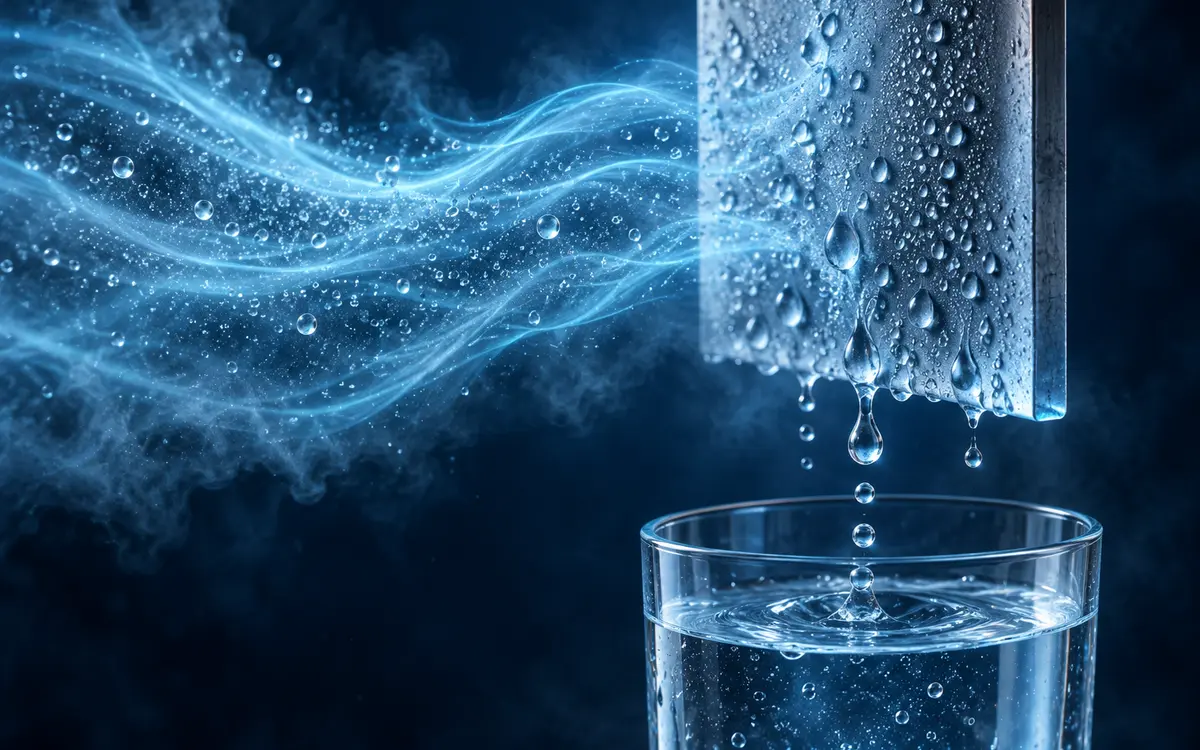
The mechanism
The basic idea is the same process you see on a cold glass. Conditions matter, especially temperature and humidity.
Warm or humid air contains invisible water vapor.
When air meets a surface below its dew point, water vapor can condense.
Condensed moisture forms liquid droplets that can be gathered.
Checkable context
No inflated output claims. Just two points you can verify.
At 20°C, saturated air contains about 17.3 g/m³ of water vapor. Twenty percent of that is about 3.5 g/m³.
This describes moisture in air, not product output.
This is historical context. It is not a forecast.
Williams, Cook & Smerdon, Nature Climate Change, 2022.
A clear fit check
This is an idea to assess, not a promise that ignores climate and conditions.
When you click, you’ll open a presentation from the creators explaining the Water Freedom System and how their build works.
See How It WorksDecide for yourself
See the creators’ explanation and decide whether the approach fits the way you prepare.
See How It Works